Constructed Voice, Organic Voice
On building what's already there

Voice.
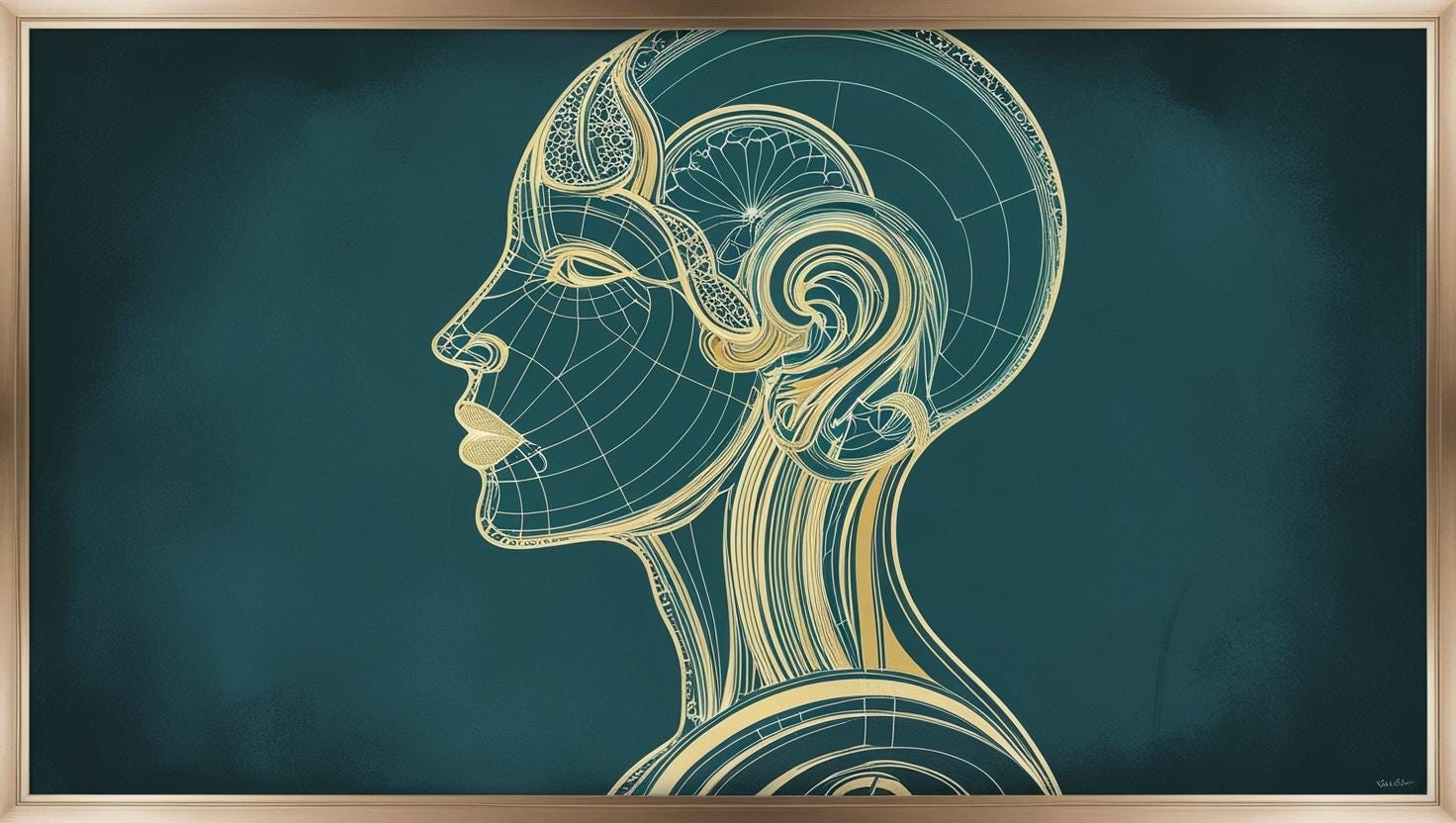
In writing, it’s the emotional texture of the person behind the page. It’s how we get to know our storyteller—through their construction of language, what they choose to focus on, and how those choices make us, the readers, feel. Voice is a craft element, which means it can be constructed. But our voice is also our most basic means of expression: given to us at birth, inherent in our bodies.
I’ve been reading Alexander Chee’s collection of essays, How to Write an Autobiographical Novel. In his essay about writing his first novel, he talks about this paradox of voice (emphasis mine):
It didn’t feel like I could say that I chose to write this novel. The writing felt both like an autonomic process, as compulsory as breathing or the beat of the heart, and at the same time as if an invisible creature had moved into a corner of my mind and begun building itself … The novel that emerged was about things I could not speak of in life…But when the novel was done, I could read from it. A prosthetic voice.
A prosthesis is a constructed replacement for something organic. In many cases, it operates better than the original. Seven years ago, my mother had double knee replacement surgery. Her new knees did what her old knees could not: bend, balance, support her. Sometimes because of trauma or neglect, our voice—our ability to express—breaks down, is stolen, or perhaps is never fully formed, and writing becomes the synthetic mechanism through which expression is made possible.
But if writing is a construction, the blueprint is often invisible as it’s being built, even to its maker. It’s this word “emerged” that Chee uses that speaks to this aspect of voice for me. Chee admits he didn’t consciously create his first novel, or at least he doesn’t feel like he did. But at the same time, writing it felt as natural as breathing.
This has been my experience writing my first novel, too. I was writing it for a year before I realized what I had. For twelve months, I just wrote short vignettes of things that happened to me in South Beach that could not have happened anywhere else on the planet. One night, I finished a vignette about an evening I spent with a porn star, who I met playing sand volleyball, I looked back at the stack and realized these stories wanted to be a novel.
Here’s the part where I made the mistake a lot of new writers make. I tried to take control. I started putting up scaffolding, sorting things into boxes, trying to make it “good writing.”
It resisted me, of course. The work stiffened under the pressure. I decided to apply to the MFA program at Warren Wilson largely because I knew I wasn’t going to get much farther without external support. At the start of my first semester, I was so far gone I’d made a Trello board detailing every scene in my novel, complete with character summaries, backstories—the whole map. My plan was to march through my roadmap like a one-woman dev team, with my advisor as my CEO.
Instead, Tim Horvath nodded so calmly and kindly, and suggested, “Maybe you should loosen your grip a little.”
I took his advice and a semester later, almost like magic, I had my first draft done. Somewhere in the process of letting go I developed the ability to hear my narrator’s voice in my head, and all I had to do is record her. As I continue to revise this draft, I have this distinct feeling that someone’s got the final version, and I’m just a notetaker. Who’s got it, exactly, I couldn’t say.
Writing as emergence, as the uncovering of voice, is something I talk to my writing clients about a lot. They tend to come to writing with rules they think they have to follow in order for their work to be “good.” They ask me if a sentence should be structured this way or that way. My answer is usually frustratingly Socratic: “Well, what are you trying to accomplish?” Another answer I try to give gently is that focusing on making it “good” is actually blocking them from making it at all.
What I’m offering here is simple. It’s what reading Chee’s essay offered me: encouragement to keep muddling through the paradox of constructing something that, somehow, you know already exists. To that end, it’s less constructing and more discovering, revealing—until suddenly you’ve got a thing that somehow expresses a truth beyond what you thought you were capable of, beyond what you thought, period. By then, whatever mechanism that brought you there doesn’t matter so much.